Can you do a microblading course online? It’s a question I get asked often from beauty therapists and clients who want to add microblading to their beauty services. As someone who runs Cosmetic Tattoo Studio Melbourne Face Figurati, I know online learning has its place — but hands-on practice with real microblading tools, practice skin and live client consultation is where your confidence truly comes alive.
In this article, I’ll share the truth about microblading training, from theory modules and practice mats to face-to-face courses and business-building steps. If you’re considering a microblading online course, this will help you separate the hype from what the beauty industry really expects.
Contents
- 1 What You’ll Learn in Online Brow Training
- 2 Why You Can’t Skip Hands-On Techniques
- 3 Online vs Face-to-Face Courses
- 4 Melbourne Standards and the Beauty Services Industry
- 5 What Training Kits Usually Include
- 6 Why Live Client Consultation Matters
- 7 Timeline to Becoming a Certified Artist
- 8 Final Takeaway from Olha Po
- 9 FAQ
- 9.1 Can I start taking clients with an online microblading course?
- 9.2 What’s the difference between microblading and eyebrow feathering?
- 9.3 Can I do microblading in Brisbane with an online certificate?
- 9.4 Do microblading kits cover everything I need?
- 9.5 How long does it take to get a recognised microblading certification?
What You’ll Learn in Online Brow Training
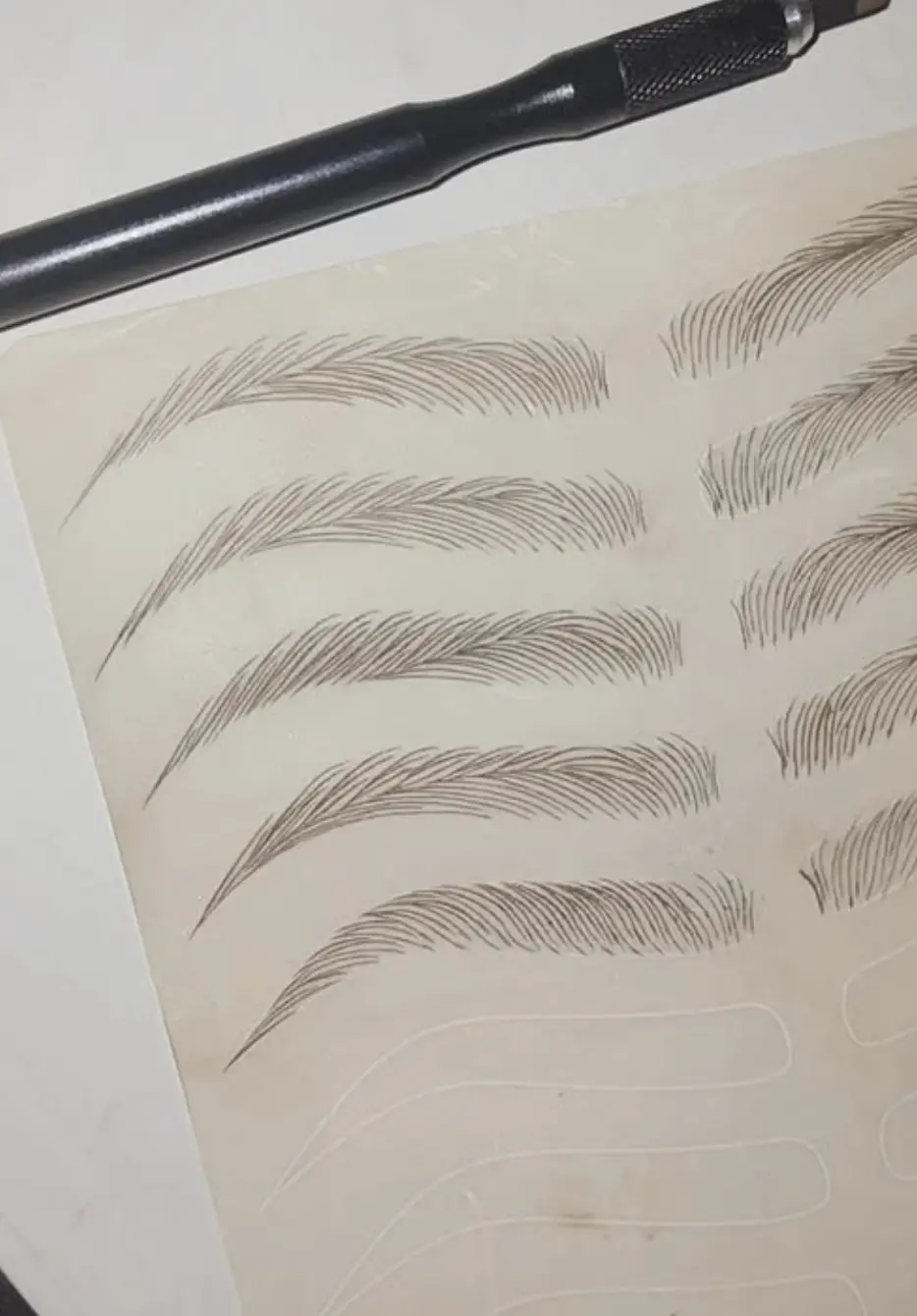
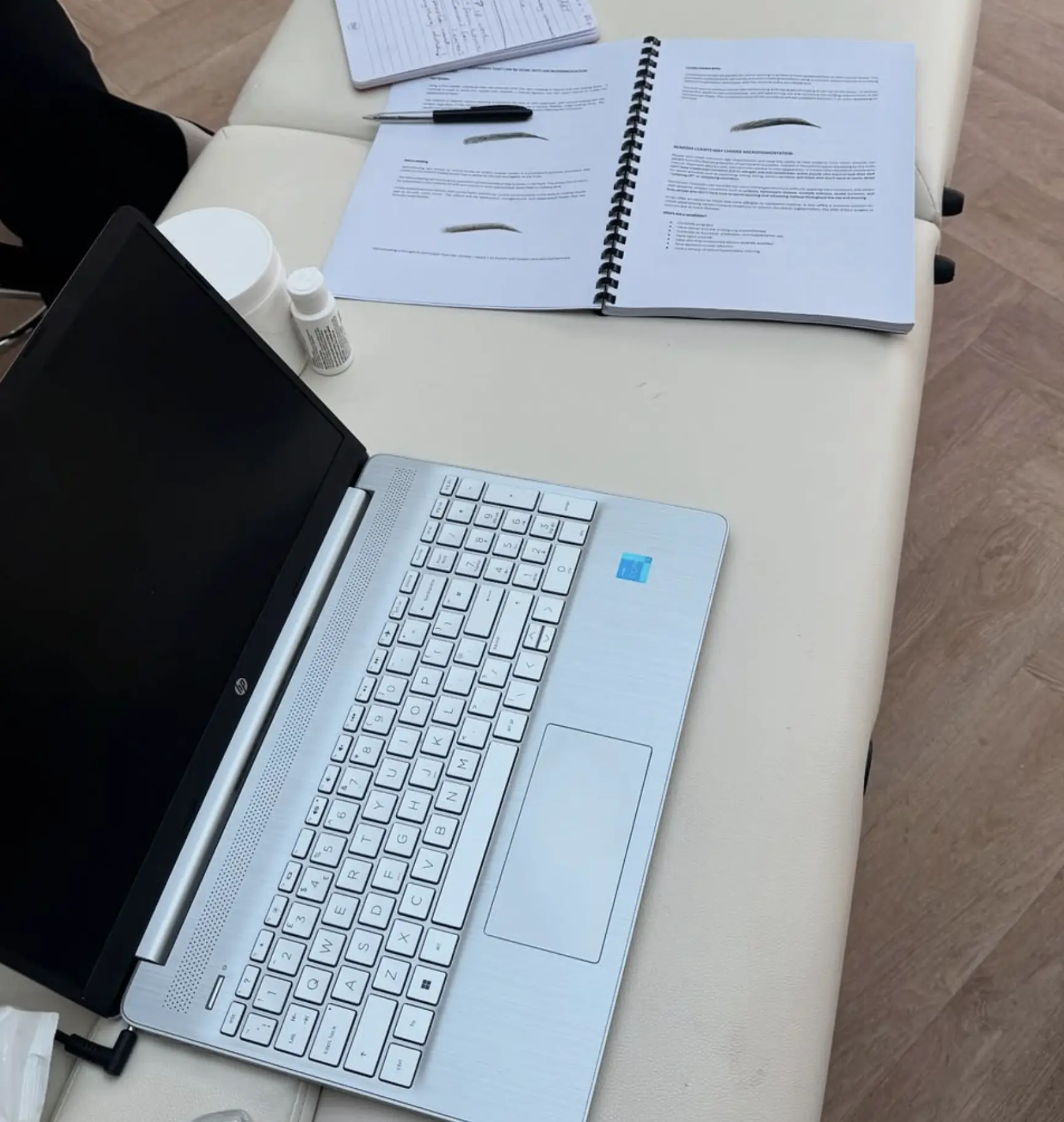
Most microblading courses online cover the basics: skin anatomy, colour theory, pigment choices, hygiene and the structure of hair strokes. You’ll get a training manual and a certificate of completion when you finish the modules. Some providers even include a full microblading kit with practice mats, disposable rulers, measuring brow tape, pigment holders, and eyebrow shaping razors.
That’s all good for building your base knowledge. But theory alone won’t prepare you for real clients. Cosmetic tattooing isn’t just about knowing the steps — it’s about learning how to adapt when your client’s natural brows don’t match or when skin behaves differently during the microblading eyebrow tattoo procedure.
Why You Can’t Skip Hands-On Techniques
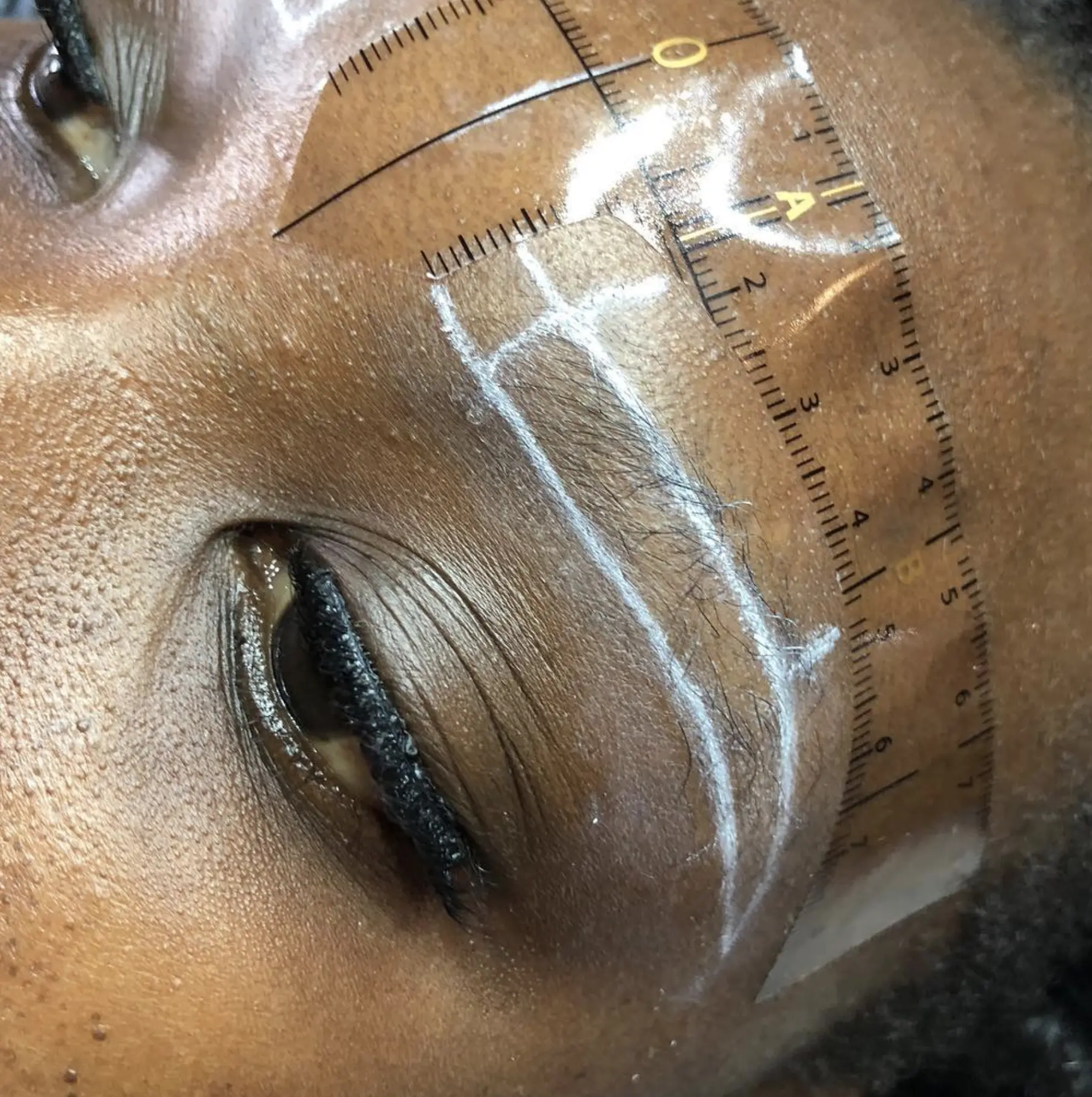
Reading about microblading techniques is not the same as feeling the blade move through skin. On a practice mat, your strokes might look perfect, but on real brows, the resistance changes with every client. And no amount of online videos will prepare you for the moment your model sneezes mid-stroke.
At Cosmetic Tattoo Studio Melbourne Face Figurati, I’ve worked with students who completed a microblading online course but struggled in live sessions. They understood colour theory and mapping, but froze when faced with an unpredictable client consultation. That’s why I always recommend a pathway that blends online modules with in-person mentoring.

Online vs Face-to-Face Courses
To give you a better idea, here’s how the options stack up:
| Aspect | Online Microblading Course | In-Person Microblading Training | Hybrid (Best of Both) |
|---|---|---|---|
| Theory (skin, pigment, colour theory) | ✔️ Self-paced | ✔️ Classroom, interactive | ✔️ Both |
| Practice tools (kit, practice mat, rulers) | ✔️ Often included | ✔️ Provided | ✔️ Full kit |
| Client consultation & shaping | Limited (videos only) | Hands-on, live models | Mixed |
| Live model work | ❌ Not possible | ✔️ Essential | ✔️ Usually included |
| Feedback on technique | Generic or delayed | Immediate, personalised | Strong |
| Certificate of completion | ✔️ Issued, but limited recognition | ✔️ Recognised | ✔️ Recognised |
| Readiness for the beauty services industry | Low–Medium | High | High |
Source: 2024–2025 data from Australian beauty academies and training providers.
Melbourne Standards and the Beauty Services Industry
In Melbourne, the cosmetic tattoo and beauty services industry is heavily regulated. Every microblading eyebrow artist must follow council hygiene standards and prove competency before working legally. Many online-only certificates — especially those tied to microblading in Brisbane or overseas schools — are not valid here.
This is where face-to-face courses matter. Trainers assess your treatment procedure setup, pigment use, and infection control practices. They also check how you manage real-life client interactions — something no video can replicate.
What Training Kits Usually Include
One of the perks of a microblading course is the starter kit. Typically, you’ll get:
- Microblading tools (pens and blades)
- Pigments for natural shades
- Practice skin/practice mat for hair strokes
- Disposable rulers and measuring brow tape
- Eyebrow shaping razors for prep
- Pigment holder for clean setups
These are great for learning at home, but they don’t replace practising on a real client’s natural brows. At Cosmetic Tattoo Studio Melbourne Face Figurati, I encourage students to see their kit as a foundation, not the final step.
Why Live Client Consultation Matters
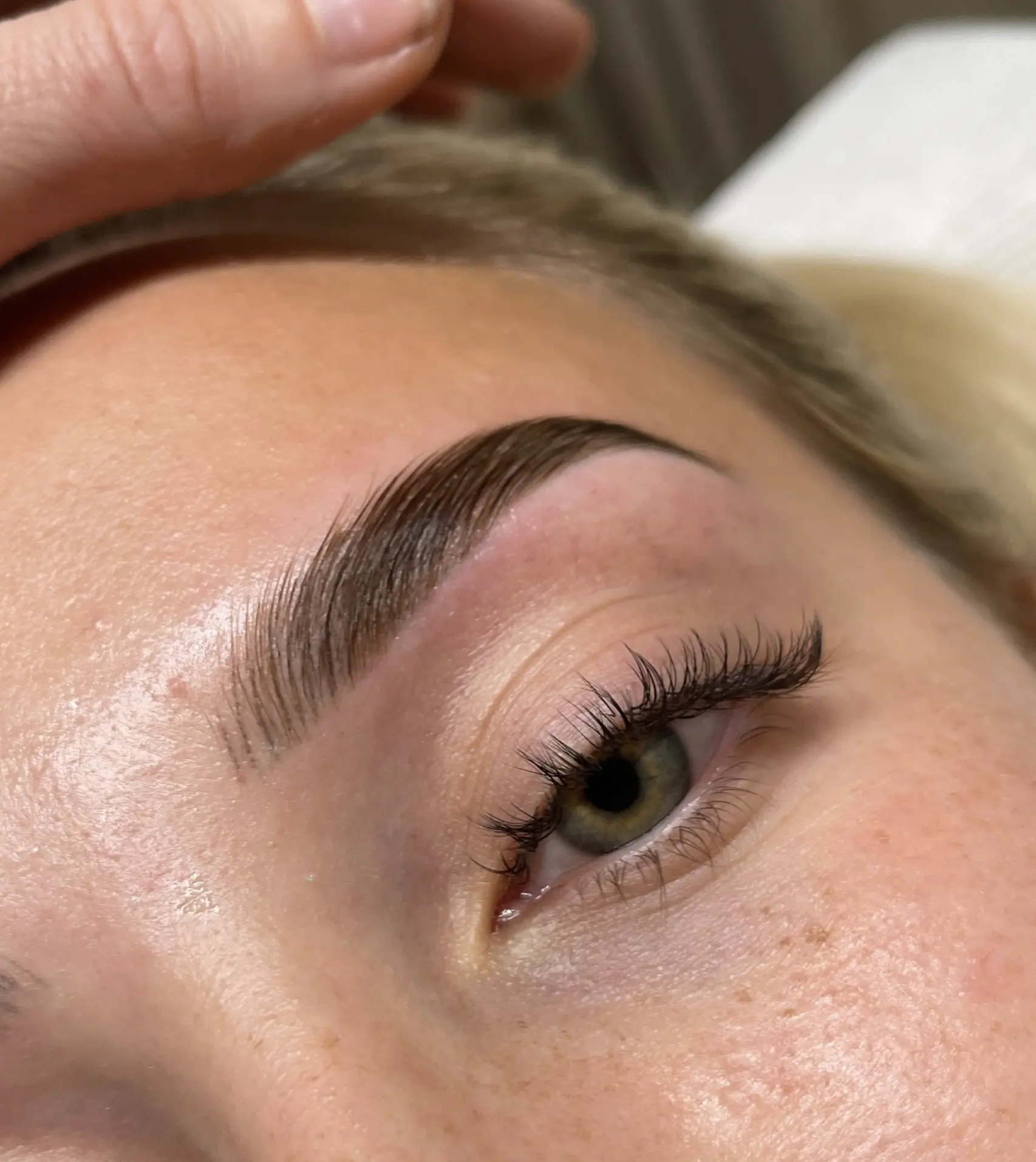
Microblading is half technical skill, half people skills. Every successful eyebrow tattoo procedure starts with a proper consultation. Clients often arrive with photos of microblading eyebrow tattoos from Instagram or with past work from another city, like microblading in Brisbane. As the artist, you’ll need to assess their expectations, explain healing and decide if their skin is even suitable.
These conversations can’t be taught online. They require practice, empathy and an understanding of how cosmetic tattoo results vary between different lifestyles and skin types.
Timeline to Becoming a Certified Artist
Here’s what the process looks like if you combine online and in-person learning:
- Weeks 1–4: Complete theory online (colour theory, hygiene, anatomy).
- Weeks 5–6: Attend in-person classes, practice microblading eyebrow strokes and map brows on live models.
- Weeks 7–10: Case studies with feedback, refine microblading eyebrow tattoo technique.
- Months 3–6: Submit supervised work and get certified.
- Month 6 onwards: Start offering services like microblading eyebrow tattoo treatments.
Once you’ve got your microblading certification, you’ll want to get established in the beauty industry. In Melbourne, that means combining social media with word-of-mouth. Many artists expand into related services like eyebrow feathering, lip tattooing or broader beauty therapies.
At Cosmetic Tattoo Studio Melbourne Face Figurati, we help new artists build their reputation. A microblading course isn’t just about the treatment procedure — it’s also about being confident enough to promote yourself, manage consultations and grow your own client base.

Final Takeaway from Olha Po
So, can you do a microblading course online? Yes — but treat it as your starting block, not the finish line. Online training can give you a grounding in theory, tools, and setup, but the skills that matter most — from microblading techniques to live client consultation — only come with supervised practice.
At Cosmetic Tattoo Studio Melbourne Face Figurati, I regularly help students bridge the gap between online study and face-to-face training. If you’re serious about building a career in eyebrow microblading, commit to both. That’s how you’ll deliver safe, natural and beautiful results.
FAQ
Can I start taking clients with an online microblading course?
No, in Melbourne. You need supervised practice, microblading certification, and council-approved hygiene training before you can legally offer services.
What’s the difference between microblading and eyebrow feathering?
Both create hair strokes, but a microblading eyebrow tattoo involves a handheld tool implanting pigment, while feathering can include machine techniques.
Can I do microblading in Brisbane with an online certificate?
Regulations vary. Some microblading Brisbane providers accept hybrid training, but most still require in-person assessment before insurance approval.
Do microblading kits cover everything I need?
Most starter kits include practice mats, disposable rulers and pigments. But you’ll still need a licensed studio setup to perform treatments legally.
How long does it take to get a recognised microblading certification?
On average, 6 months of blended training (theory plus face-to-face) before you’re confident and approved to work on paying clients.